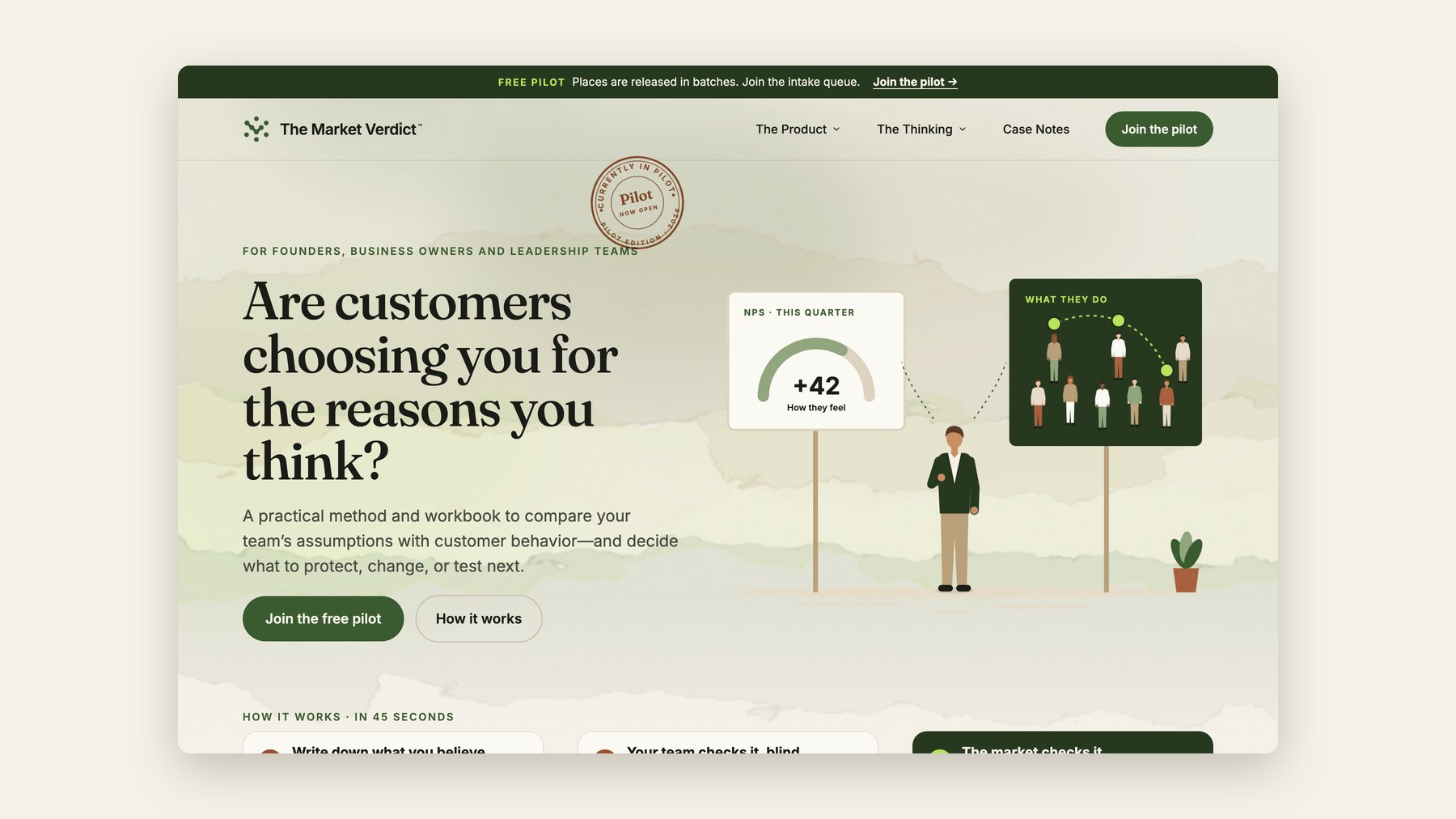

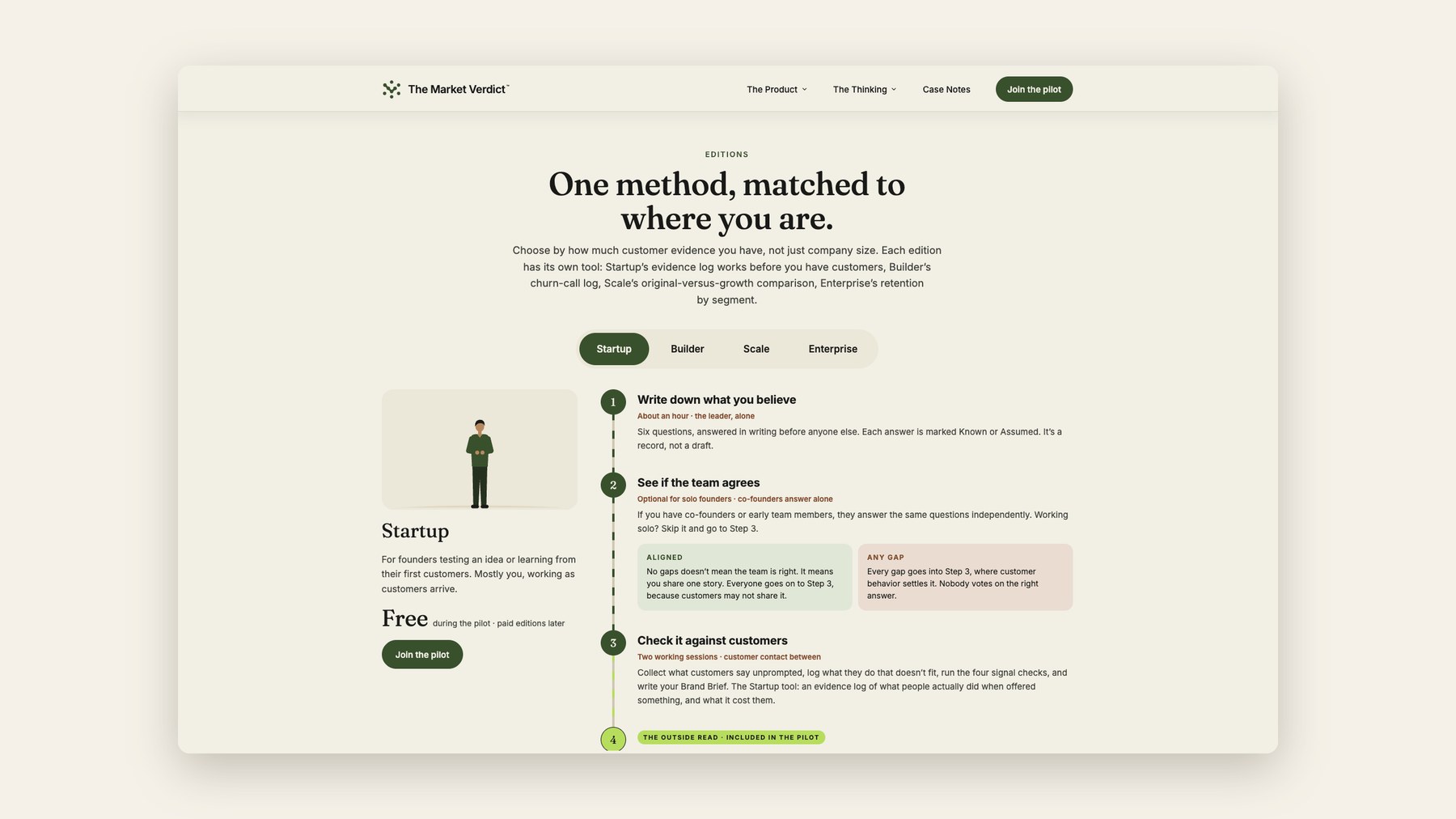
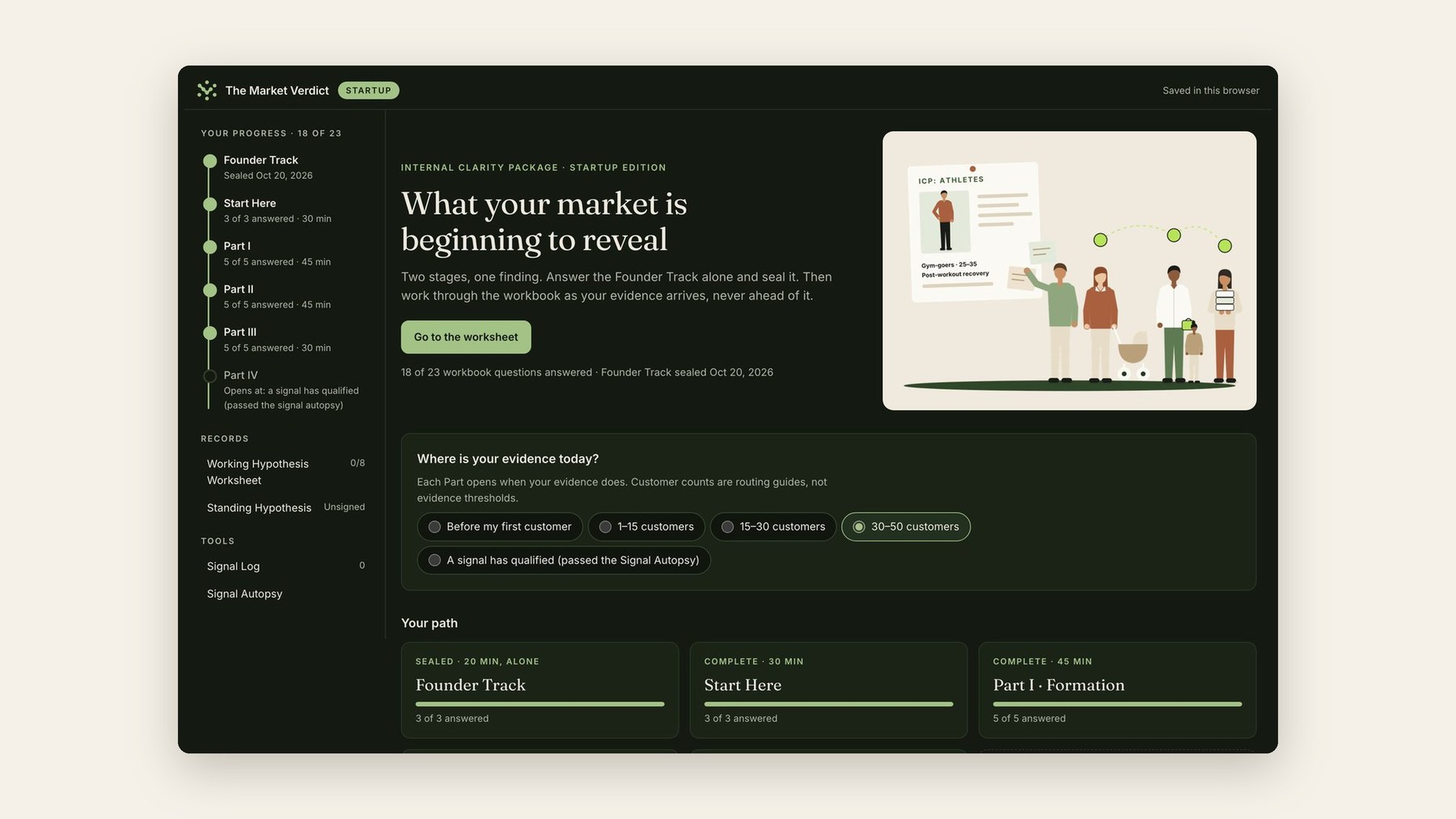
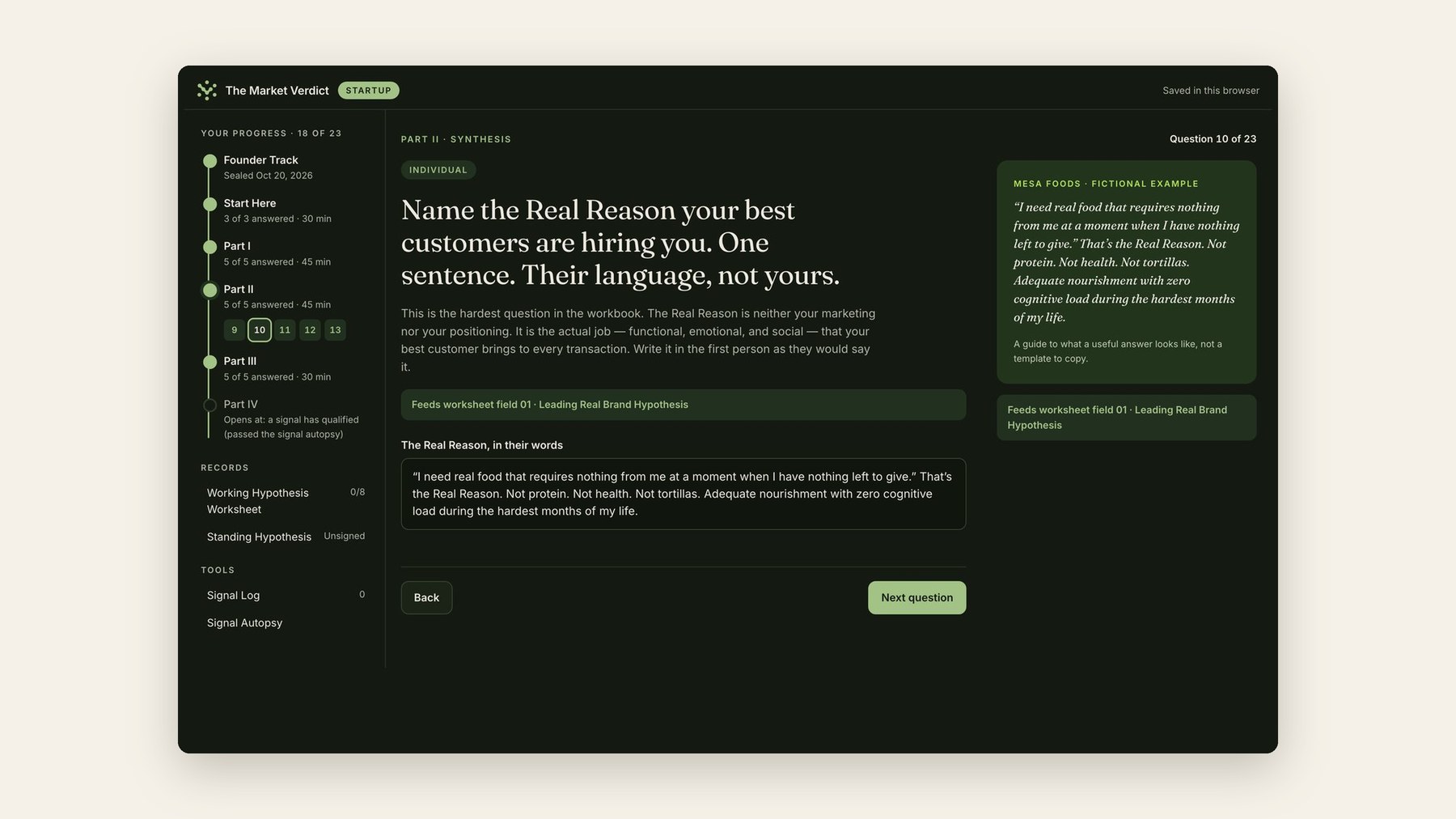
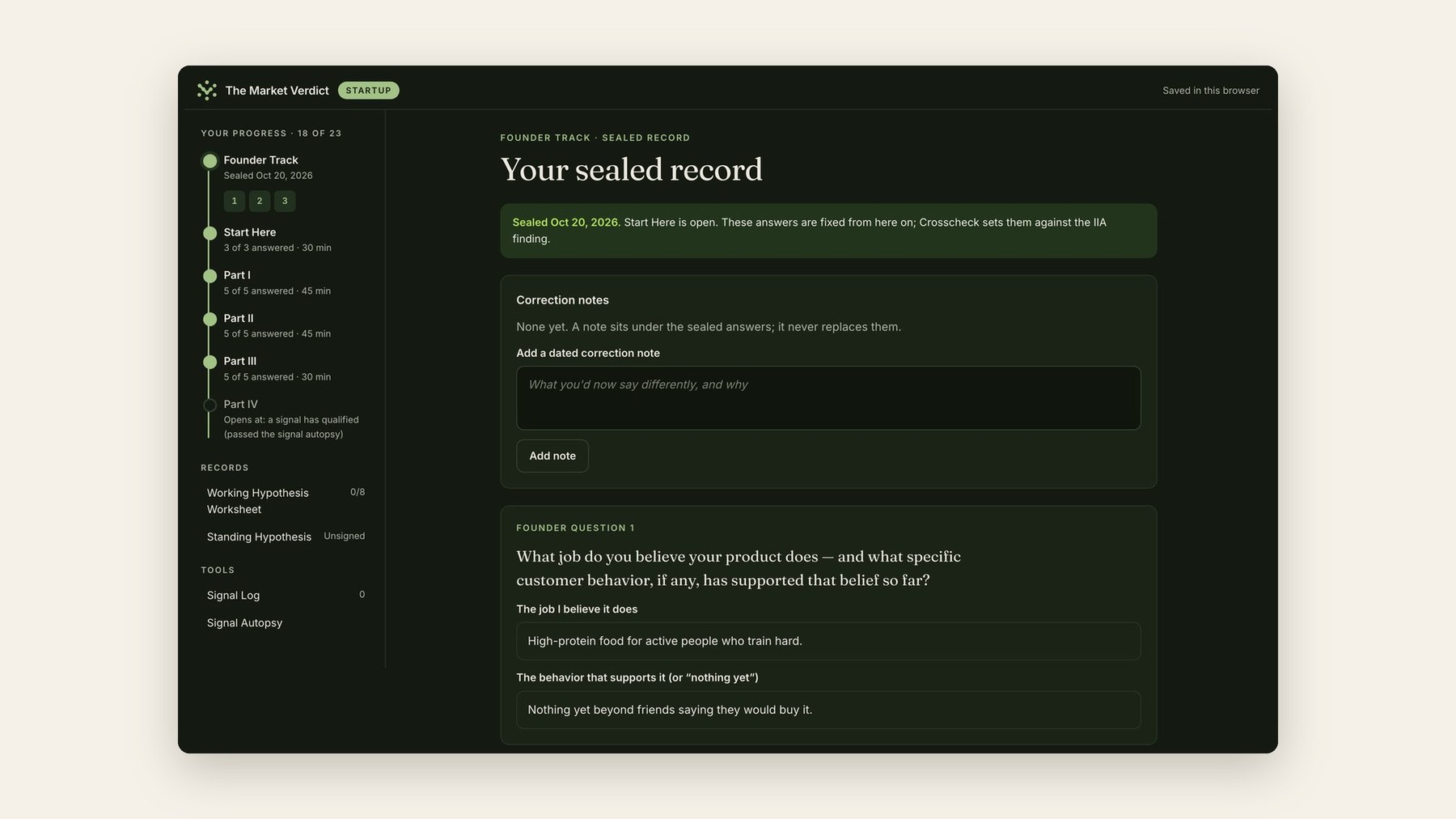
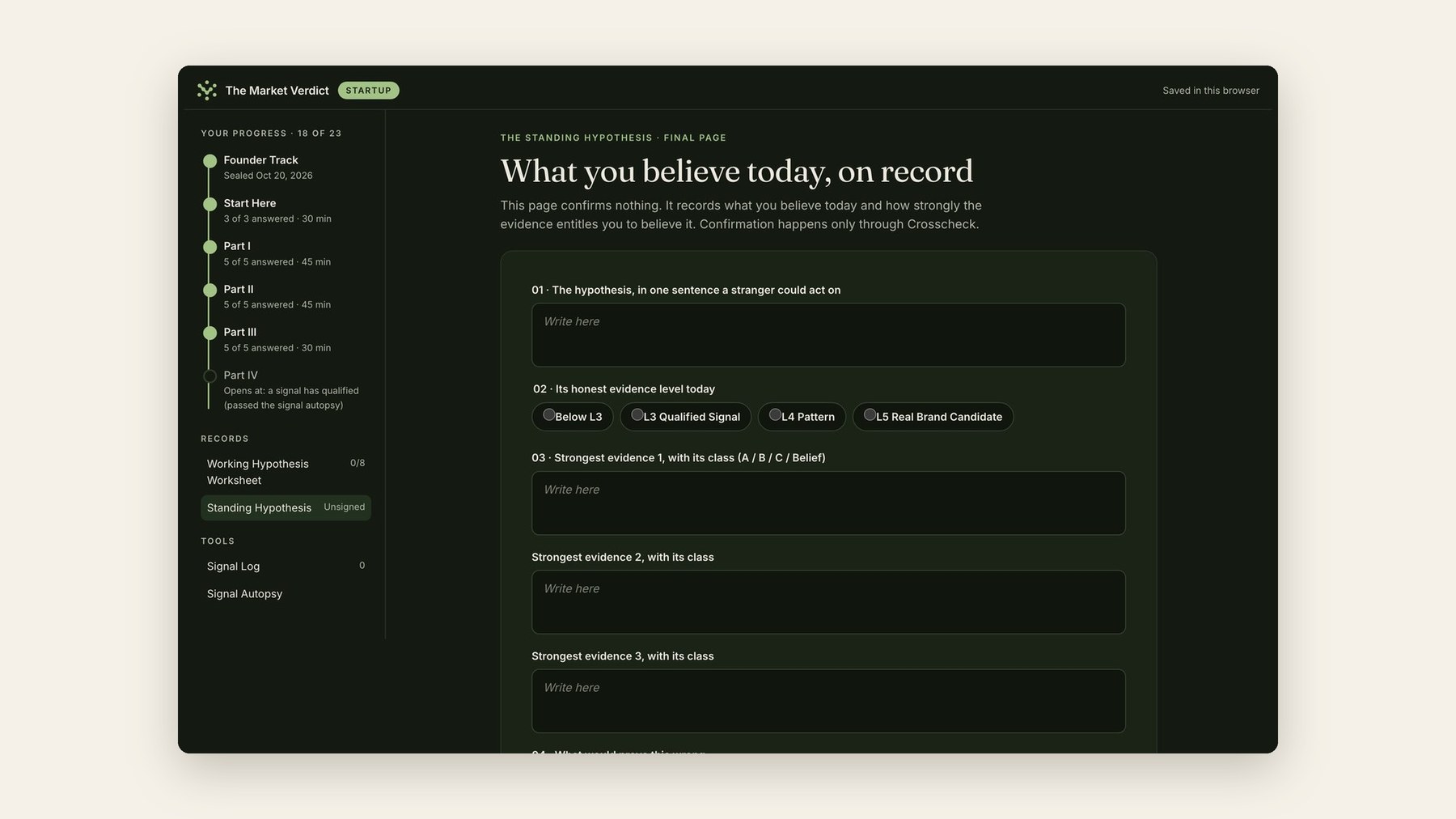
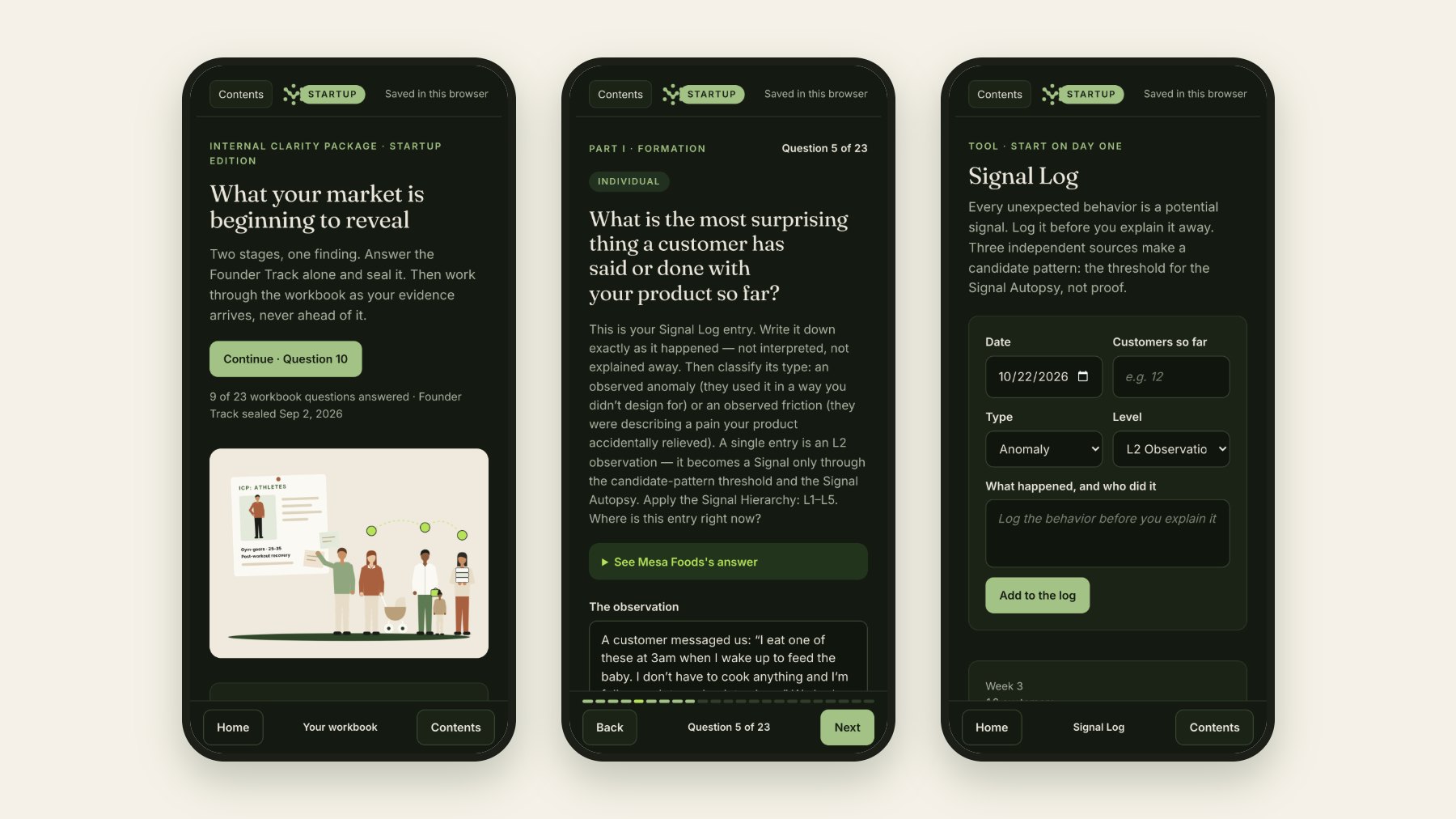
A method for reading what the market has actually confirmed about a brand from customer behavior, with printed workbooks for four stages of company and an online workbook that runs the method for a whole team.
- What we did
- Methodology, Brand identity, Illustration, Website design, Workbook design, UX/UI design
What it is
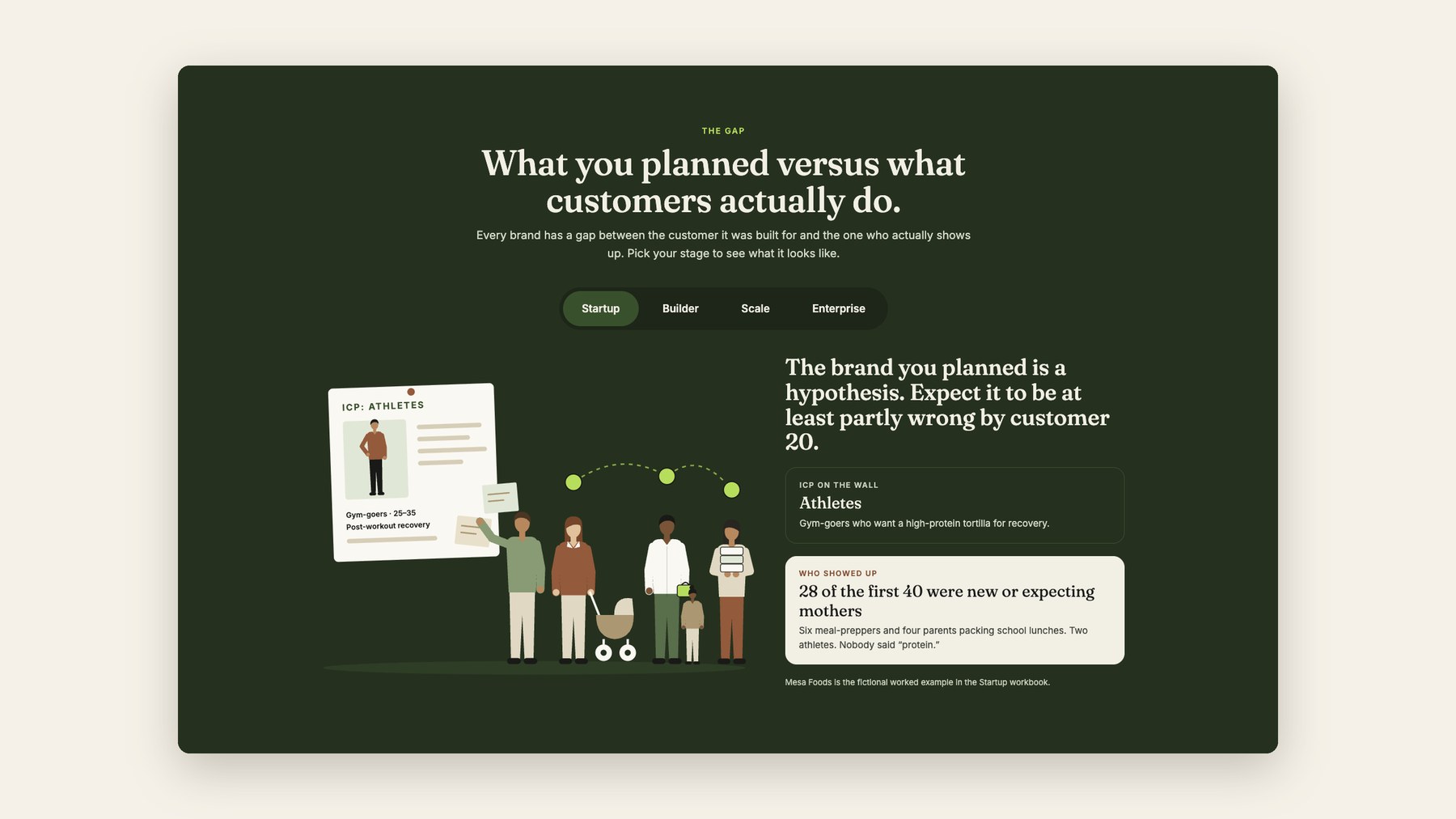
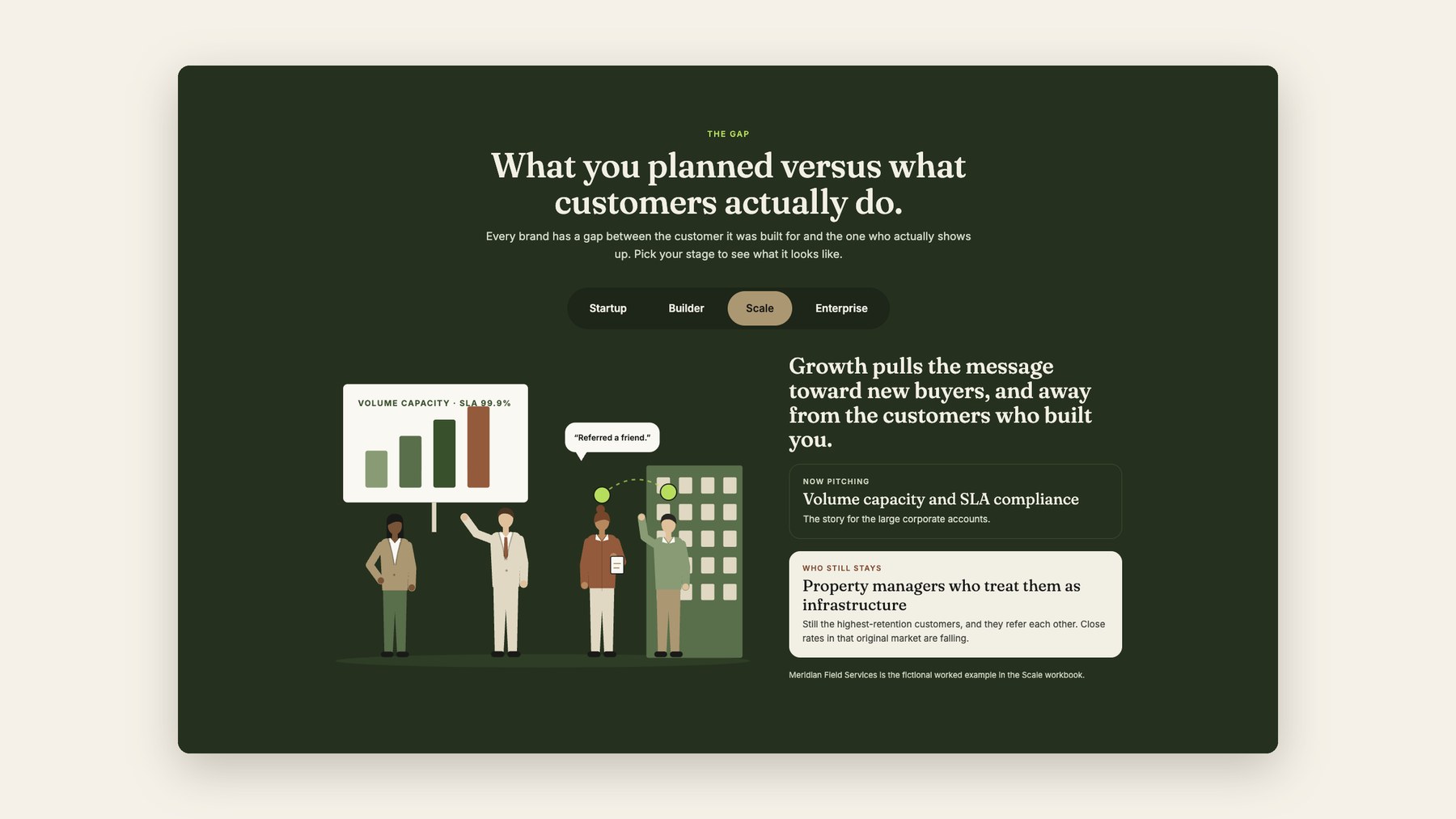
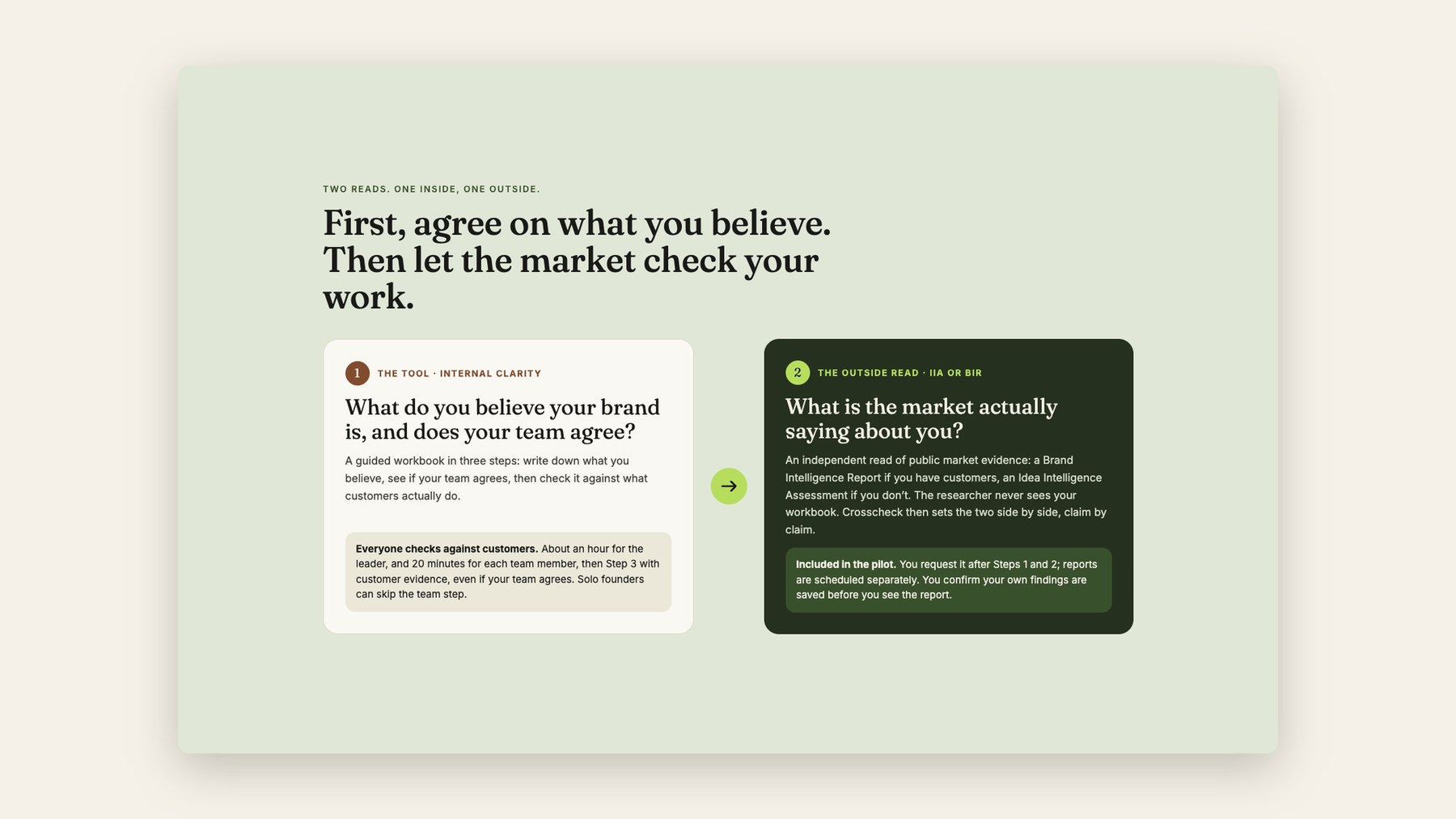
The Market Verdict reads the gap between what a brand says it is and what customers have confirmed it is, through what they buy, come back for and recommend without being asked. It produces a finding, not a score. It's built for the window before a new leader's first big commitments, when changing direction still costs a conversation instead of a campaign.
Why it exists
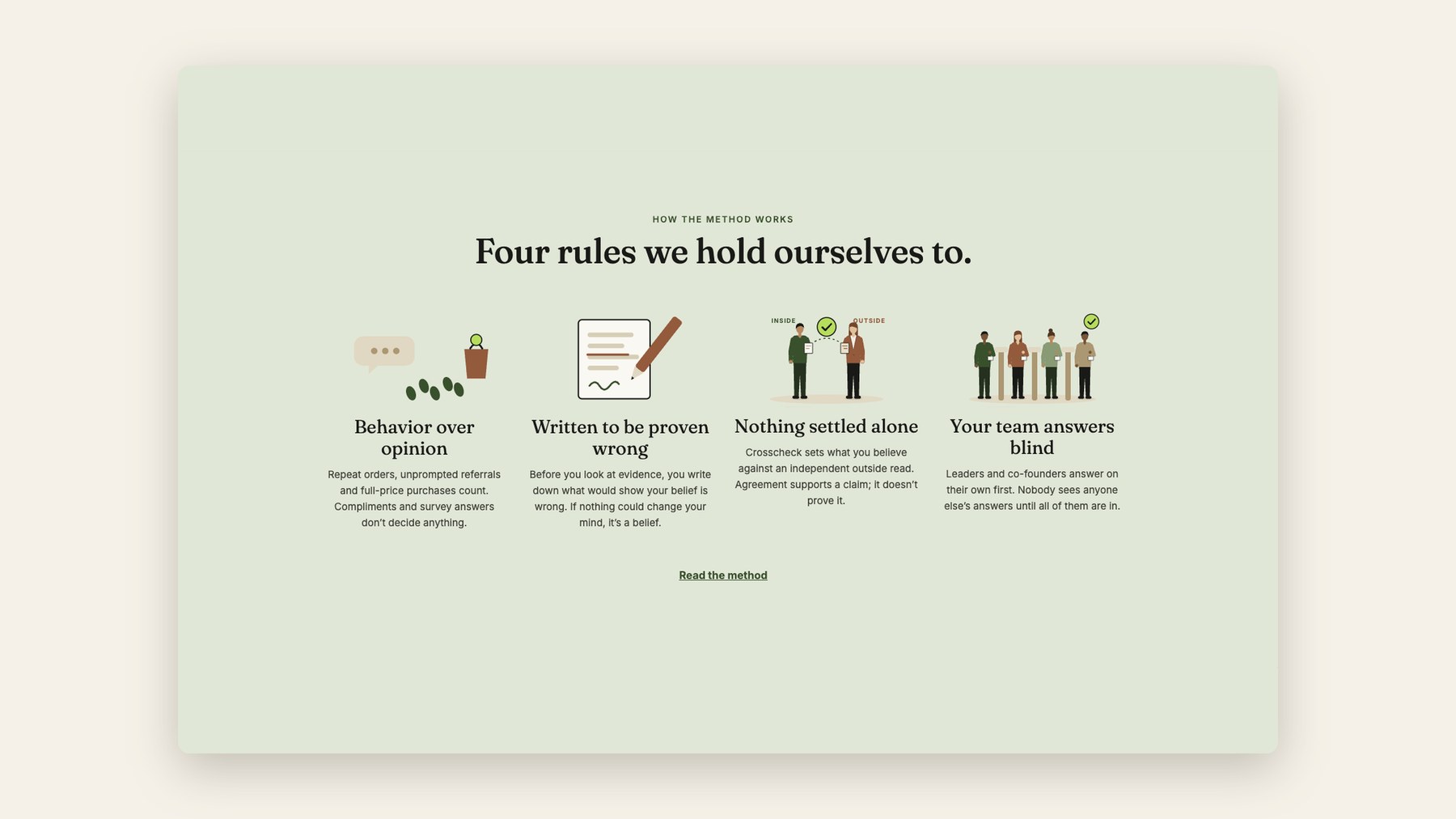
NPS, satisfaction scores and brand trackers ask customers what they think. None of them read what customers have actually done over time. Those two things drift apart more often than most companies expect, and the gap is usually where the most important finding is.
How it works
Two stages, one finding. The leader answers alone first and seals it. Then the team answers on their own, without seeing anyone else's answers until everyone is in. Only then are the answers compared, and every claim that goes into the final record has to say what evidence backs it.
The workbooks
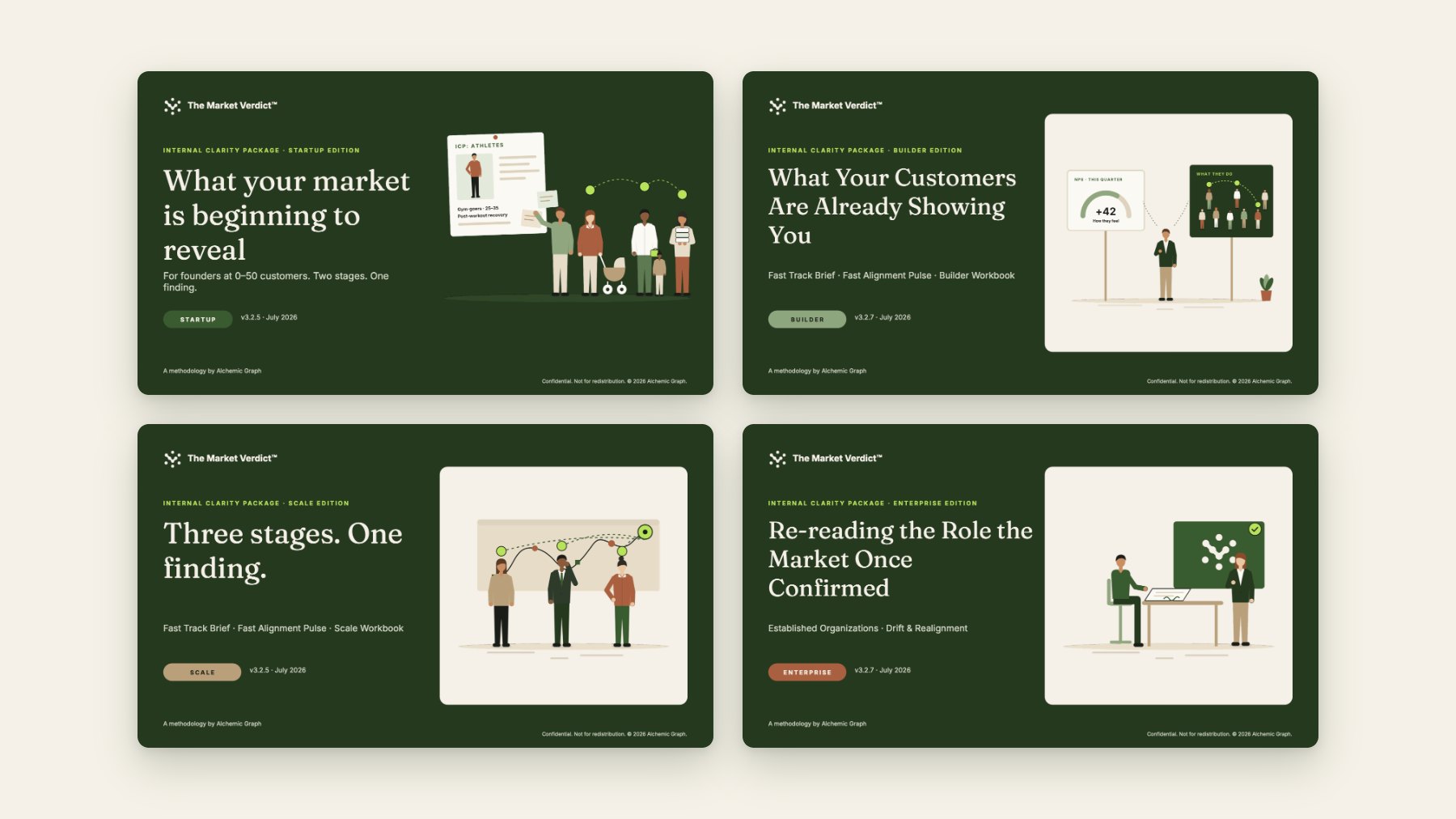
Four editions for four stages of company: Startup, Builder, Scale and Enterprise. Each one walks a fictional company through every question (Mesa Foods, Trail Coffee Co., Meridian Field Services and Vertex Systems), so there's always a worked example beside the blank page. A methodology book explains the system behind them, and a whitepaper makes the case for it.
The brand
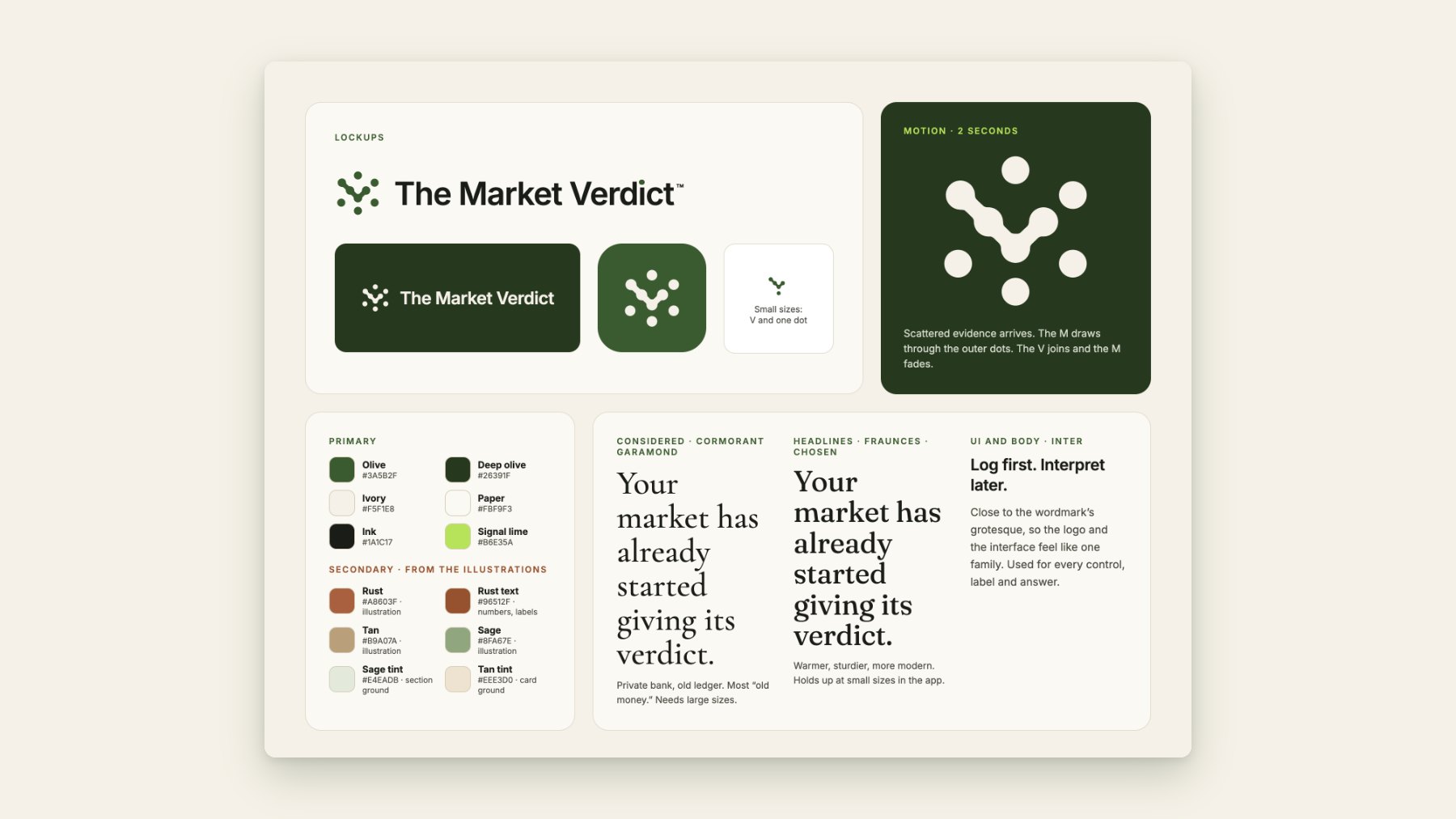
Ivory paper, deep green and serif headlines, so it reads like a field guide, not a survey. The mark is five loose dots that join into a V: scattered evidence becoming a verdict. A set of illustrations carries the same palette across the site, the workbooks and the app, and each edition gets its own accent: olive, sage, tan and rust.
The workbook, online
Now in development. One purchase opens a private workspace where each person answers on their own, and nothing is shared until everyone is in. The printed workbooks and the app read from the same content, so they never drift apart.